
DSL as Decolonial Research Praxis
Institutional Power, Story Circulation, and Epistemic Justice
By Kawther Ramadan
Academic research has long privileged written text as the primary form through which knowledge is produced, validated, and shared. Yet many experiences do not fit neatly into conventional scholarly formats. Stories carry emotion, memory, embodiment, contradiction, and relational meaning in ways that academic prose often cannot.
Digital storytelling offers another possibility.
Bringing together voice, image, sound, and narrative, digital storytelling has emerged as a participatory and arts-based method that allows people to represent their experiences on their own terms. It has been used across fields such as migration, health, education, and community-based research to surface lived realities that are often marginalized within institutional discourse. At its best, digital storytelling expands what counts as knowledge and who gets to produce it.
But its promise is not guaranteed.
This article asks a deeper question: What happens when participatory stories enter academic systems? If digital storytelling is meant to support epistemic justice, how are those stories shaped by university structures, research governance, publication norms, and institutional ideas of legitimacy?
This is where the conversation becomes urgent.
Why Digital Storytelling Matters in Research
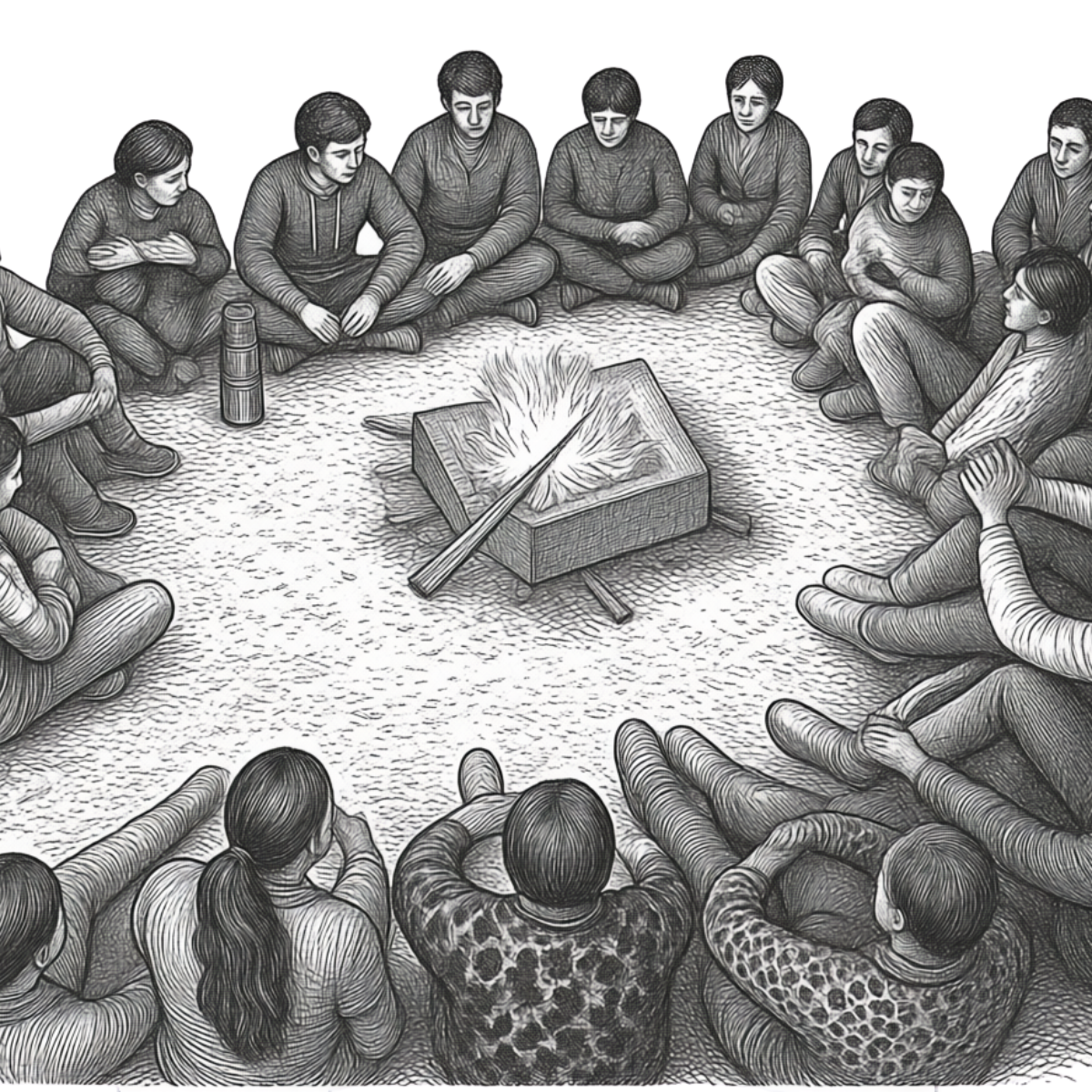
Digital storytelling began in community media spaces, where people without professional training were supported to create short multimedia narratives using accessible tools. These stories often combined spoken word, personal reflection, photographs, music, and text. What made the method powerful was not only the final product, but the process: scripting, reflection, story circles, and collaborative meaning-making.
In research contexts, this participatory process opened new ways of knowing.
Rather than treating participants as sources of data to be interpreted by experts, digital storytelling can redistribute narrative authority. It invites people to frame their own experiences, make interpretive choices, and communicate knowledge through forms that are emotional, visual, and embodied. In this sense, storytelling is not simply illustrative. It can be analytical, relational, and politically generative.
This is one reason digital storytelling resonates with feminist pedagogy, participatory action research, and critical traditions that value lived experience as a legitimate source of knowledge. It also aligns with broader efforts to challenge the dominance of text-based scholarship and create more accessible forms of knowledge mobilization.
More Than Expression: Storytelling as Epistemic Intervention
Within decolonial and participatory traditions, storytelling is not understood as mere personal expression. It is a way of intervening in dominant knowledge systems.
For scholars working against extractive research practices, the key issue is not only whether communities are invited to “share their stories,” but how storytelling can challenge the deeper hierarchies that determine whose knowledge is recognized as valid. Decolonial scholarship reminds us that academic institutions have historically privileged Western, textual, and supposedly objective forms of knowing while marginalizing other epistemologies.
From this perspective, storytelling can function as a counter-narrative practice. It can make visible what institutions often overlook: affect, memory, silence, place, spirituality, relationality, and community knowledge. It can also disrupt the assumption that theory belongs only to the academy, while lived experience belongs elsewhere as raw material.
Digital storytelling becomes especially significant here because it combines narrative with form. Voice, pacing, sound, image, and silence all shape meaning. What emerges is not just a story about experience, but a way of knowing through experience.
The Structural Tension
And yet, the empowering language often attached to digital storytelling can obscure an important tension.
Creating space for voice does not automatically shift structural power.
A workshop may be collaborative. A story may be self-authored. A process may be healing, reflective, or politically meaningful. But once those stories move into institutional research environments, they encounter a very different set of conditions. Universities, ethics boards, funding bodies, publication systems, and knowledge translation frameworks all shape what becomes visible, credible, and useful.
This is where institutional critique matters.
Stories produced through participatory methods are often welcomed into academic spaces as signs of innovation, inclusion, or diversity. But welcome does not necessarily mean transformation. Narratives can be celebrated symbolically while the power structures that organize academic knowledge remain untouched. In these cases, storytelling risks becoming evidence of institutional progress rather than a challenge to institutional hierarchy.
This is one of the central paradoxes of participatory research: a method intended to redistribute power can still be absorbed into systems that leave power intact.
Decolonial Research and Relational Accountability
Decolonial and Indigenous methodologies offer an important response to this tension by shifting the focus from participation alone to accountability.
Relational accountability asks different questions. Not only: Was the method participatory? But also: Who is this research accountable to? Who benefits from it? What relationships does it sustain? What knowledge cannot or should not be extracted?
In this framework, knowledge is not produced through detached observation. It is produced through relationships. Research therefore carries responsibilities—not just to institutional ethics requirements, but to the communities, histories, and futures bound up in the work.
This also means that refusal matters. Not everything should be made available for academic circulation. Not all stories are meant for public consumption. Decolonial research requires attention to boundaries, consent, and the right not to share. It asks researchers to resist the pressure to turn every experience into accessible content or institutional value.
This is especially important when working with communities whose knowledge has historically been mined, translated, and repackaged for external benefit.
When Stories Travel
One of the most underexplored questions in digital storytelling research is what happens after stories are created.
How do they travel?
Who interprets them?
What gets lost in translation?
How are they archived, cited, excerpted, or reframed?
As participatory stories circulate through academic and policy systems, they are often reshaped to fit dominant norms of clarity, impact, evidence, and legibility. Context may be compressed. Complexity may be flattened. Stories may be quoted as examples while their epistemic force is reduced. They may circulate widely while storyteller control diminishes.
This is not simply a question of dissemination. It is a question of epistemic authority.
When narratives are translated into institutional formats, they can gain visibility while losing relational context. They may be treated as data rather than theory, as illustration rather than analysis, as testimony rather than knowledge in their own right. In this process, the politics of storytelling shifts. What began as a participatory intervention may be absorbed into academic systems that continue to privilege some forms of interpretation over others.
This is why circulation itself must be understood as a methodological issue.
The Research Gap
The existing literature offers important insights into digital storytelling as a participatory, arts-based, and community-engaged method. Decolonial scholarship, meanwhile, provides strong critiques of extractive research and calls for more accountable, relational, and anti-oppressive approaches to knowledge production.
But there remains a gap at the intersection of these conversations.
While many scholars celebrate the transformative potential of digital storytelling, fewer examine how that potential is shaped, limited, or reconfigured by the institutional infrastructures through which stories move. We know much about story creation. We know less about what happens when those stories enter universities, research systems, publication pipelines, and knowledge mobilization frameworks.
This gap matters.
If digital storytelling is to function as decolonial research praxis rather than symbolic inclusion, then the focus cannot remain only on storytelling as method. It must also include storytelling as circulation, governance, translation, and institutional negotiation.
Toward Digital Storytelling as Praxis
To think of digital storytelling as praxis is to take both its promise and its constraints seriously.
It means understanding storytelling not as a neutral technique, but as a political and epistemic practice shaped by power. It means recognizing that participatory methods do not operate outside institutions, even when they seek to challenge them. And it means asking whether digital stories can sustain their decolonial commitments as they move through academic environments structured by performance metrics, publication norms, and epistemic hierarchies.
This does not diminish the value of digital storytelling. It clarifies the stakes.
Digital storytelling matters because it opens space for other forms of knowledge: embodied, affective, relational, and multimodal. It matters because it can support co-creation, counter-narrative, and community-centered research. But for that promise to hold, researchers must attend not only to how stories are made, but also to how institutions receive them, shape them, and sometimes neutralize them.
The challenge, then, is not simply to include stories within academia.
It is to ask what academic knowledge might become if stories were taken seriously as theory, method, and intervention.
References
Ahmed, S. (2012). On Being Included: Racism and Diversity in Institutional Life. Duke University Press.
Brown, L., & Strega, S. (Eds.). (2015). Research as Resistance. Canadian Scholars’ Press.
De Jager, A., Fogarty, A., Tewson, A., Lenette, C., & Boydell, K. (2017). Digital storytelling in research: A systematic review. The Qualitative Report.
Freire, P. (2017). Pedagogy of the Oppressed. Bloomsbury Academic.
Gudynas, E. (2020). Extractivisms: Politics, Economy and Ecology. Fernwood Publishing.
hooks, b. (1994). Teaching to Transgress. Routledge.
Lambert, J. (2018). Digital Storytelling: Capturing Lives, Creating Community. Routledge.
Santos, B. de S. (2016). Epistemologies of the South. Routledge.
Tuck, E. (2009). Suspending damage: A letter to communities. Harvard Educational Review, 79(3).
Tuhiwai Smith, L. (2021). Decolonizing Methodologies. Zed Books.
Wilson, S. (2008). Research Is Ceremony. Fernwood Publishing.
